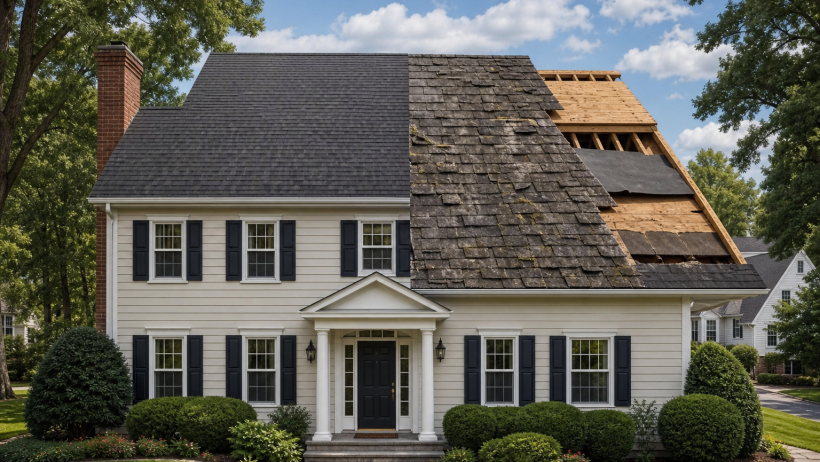

What is the lifespan of a roof in Northern Virginia? The #1 question homeowners will ask when their roof is at the 15 year mark is: “When is it time to replace the roof?” and the answer depends largely on your roofing material, installation quality and how you’ve taken care of the system throughout the years. This guide offers realistic information on how long does a roof last in Northern Virginia for the various roofing materials that are common in our region and the climatic conditions that can make the difference between a longer or shorter life.
How Long Does a Roof Last by Material Type?
Each roofing material has a particular life expectancy. What it is safe to expect from each one is as follows:
Architectural Asphalt Shingles: 20 – 30 Years
Throughout Northern Virginia, from townhouses in Reston to colonials in Fairfax, the most popular roofing material is architectural or dimensional/laminated asphalt shingle. Products such as GAF Timberline HDZ and CertainTeed Landmark provide excellent wind resistance, algae resistant coatings and manufacturer warranties of 30 years or longer.
In reality, how long does a roof last in Northern Virginia with architectural shingles? The lifespan is 20-30 years, depending on the quality of the installation, ventilation in the attic, and exposure to sunlight. Concentrated UV causes south facing and west facing slopes to age the fastest. Homes that have enough ridge ventilation and moderate tree shade always tend to fall on the high end of this range.
3-Tab Asphalt Shingles: 12 to 18 Years
Older homes or budget shingle roofs tend to use flat, single layer shingles and these may not last as long. 3-tab shingles that are installed in the challenging Northern Virginia climate typically last only 18 years or less and tend to wear out by year 12-15. Upgrading to architectural shingles during replacement extends the life of your home by years at a very low extra cost, if your home still has 3-tab shingles.
Premium Designer Shingles: 25 to 40 Years
The heavier and thicker products such as GAF Camelot, GAF Grand Canyon and CertainTeed Grand Manor have more asphalt per square foot and deeper dimensional profiles. This added mass equates to increased UV durability, wind resistance and hail protection. These high quality shingles can provide 25 to 40 years of dependable service on estate homes in McLean, Great Falls and Clifton.
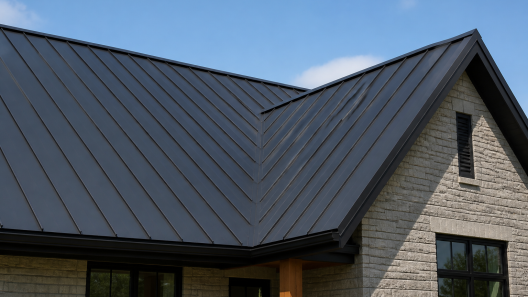
Standing Seam Metal Roofing: 40 to 70 Years
Metal roofs are becoming increasingly popular in Northern Virginia for modern farmhouse construction and for homes where a long life cycle is a worthy investment of the initial expense. With proper installation, a standing seam metal roof will last from 40 to 70 years and requires very little maintenance. Metal also helps to withstand the wind, shed snow effectively, and reflect heat from the sun, which can lower cooling costs during the humid summers in Virginia.
Natural Slate: 75 to 150+ Years
On historic homes, slate roofs are seen on houses in Alexandria, in neighborhoods around Georgetown, and in older Arlington neighborhoods. If maintained appropriately, natural slate has a lifespan of more than 100 years. The real problem with the lifetime of slate, however, is typically the fasteners and flashing, not the slate itself, and this means that in some instances, slate can be maintained rather than replaced.
Climate Factors That Impact How Long a Roof Lasts in Northern Virginia
The four-season climate of the Northern Virginia area poses special stresses on roofing products that don’t exist in milder climates:
- Freeze-thaw cycling: Winter temperatures that rise and fall above and below freezing, allowing ice to form under shingles, which will be detrimental to the glue bond and crack older materials.
- Summer heat and humidity: Algae and moss growth is encouraged by humidity and high temperatures of 90°F+ causes asphalt to oxidize rapidly over long periods of time.
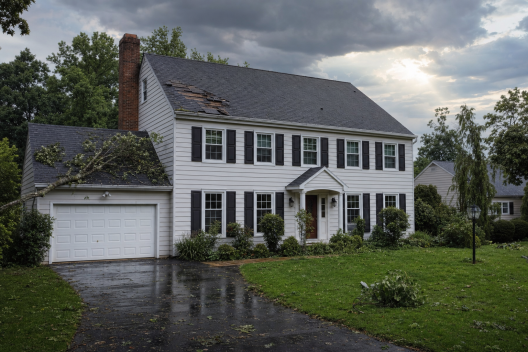
- Severe thunderstorms: Northern Virginia averages 35-45 thunderstorm days each year and severe storms will test any roofing system and bring high winds, hail and heavy rain.
- UV exposure: The roof surfaces that are exposed to the sun (South and West) will be exposed to more concentrated sunlight, causing the granules in the shingles to break down and the asphalt to become dry.
All these factors contribute to Northern Virginia roofs usually being on the lower to middle end of manufacturer warranty statements. If a shingle is labeled “30 years,” it actually will last 20-25 years in our area, without any intervention – under ideal laboratory conditions.
7 Tips For Extending Your Roof’s Lifespan in Northern Virginia
Weather can’t be controlled – but maintenance can! These are the deciding measures between an early roof failure and a roof with full potential:
- Annual inspections: Get your roof inspected by a professional annually, particularly after severe storms.
- Proper attic ventilation: Ridge and soffit vents allow heat to escape, thereby not cooking shingles from the inside out.
- Maintain clean gutters: Cleaning gutters will prevent water backing up under the shingles, which will help reduce rot and ice damage.
- Cut back overhanging branches: Overhanging branches rub shingles when it’s windy, and they drop debris that clings to the roof surface.
- Handle minor repairs quickly: A missing shingle or a crack in the flashing today can cause a leak and damage to the deck tomorrow.
- Check flashing and seals: Flashing around chimneys, vents, and skylights is often the first point of failure — inspect and reseal as needed.
- Remove moss and algae promptly: Left unchecked, biological growth holds moisture against shingles and accelerates decay.
When to Plan for a Roof Replacement
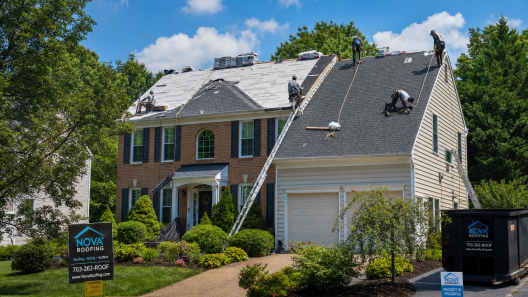
So how long does a roof last in Northern Virginia in your case? Here is a simple rule of thumb to follow: start planning for replacement when your roof is 75-80% of its life expectancy. That means it’s time to start looking for and hiring contractors around year 15 to 20 for most houses in Northern Virginia that have architectural shingles.
Keep an eye out for these indicators that it might be time to replace sooner: curling or buckling shingles, granules falling from shingles into the gutters, daylight showing through the attic decking, leaks happening regularly after rain, or moss and algae that won’t come off with cleaning. We have an in-depth guide to each of the signs that your roof needs replacing.
Once it is time to have estimates, it is important to have several estimates from local contracting firms that have the necessary experience. Check out our home exterior contractor selection guide to learn what makes a good contractor and one that does a cheap job that will lower the lifespan of your next roof.