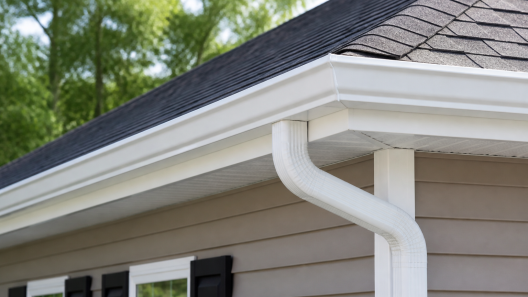





Why Gutters Matter More Than You Think: Protecting Your Foundation
Gutters aren’t glamorous. They don’t transform your curb appeal like new siding, and nobody walks into an open house and says, “Wow, look at those gutters.” But quietly, consistently, your gutter system is doing one of the most important jobs on your entire house: keeping water away from your foundation.
When gutters work properly, you barely notice them. When they fail, the damage can be catastrophic — and expensive. Here’s why this overlooked system deserves more of your attention.
What Gutters Actually Do
Your roof is a massive water collection surface. A 1,500-square-foot roof sheds roughly 935 gallons of water for every inch of rainfall. During a moderate storm, that’s thousands of gallons cascading off your roof in a matter of hours.
Without gutters, all that water falls directly off the roof edge and lands right next to your foundation. Gutters intercept that water, channel it along the roofline, and direct it through downspouts to a point safely away from the house. It’s a simple concept with profound consequences.
The Six Problems Gutters Prevent
1. Foundation Damage
This is the big one. When water repeatedly saturates the soil around your foundation, it creates hydrostatic pressure — the force of water pushing against your foundation walls. Over time, this pressure can cause cracks, bowing, and even structural failure.
In clay-heavy soils common throughout much of the eastern United States, the problem is amplified. Clay expands dramatically when wet and contracts when dry, creating a cycle of pressure and release that stresses foundation walls with every rain event. Proper gutters and downspout extensions keep the soil moisture level around your foundation relatively stable — and that stability is what protects the structure.
Foundation repairs typically cost $5,000–$15,000 and can exceed $30,000 for severe damage. A functioning gutter system costs a fraction of that.
2. Basement Flooding and Moisture
Water pooling around your foundation doesn’t just threaten the structure — it finds its way inside. Basement water intrusion is one of the most common homeowner complaints, and malfunctioning or missing gutters are a leading cause. Water seeps through cracks, porous concrete, and the joint where the foundation wall meets the footing.
Even when water doesn’t visibly flood the basement, excess moisture around the foundation elevates indoor humidity, promoting mold growth, musty odors, and deterioration of stored belongings. The EPA warns that mold can begin growing on damp surfaces within 24–48 hours.
3. Landscaping Erosion
Without gutters, water sheets off the roof and hammers the ground directly below the eaves. This creates trenches in flower beds, washes away mulch, exposes plant roots, and erodes carefully graded soil. Over time, the erosion can actually reverse the grading around your home — directing water toward the foundation instead of away from it, compounding the foundation risk.
If you’ve ever noticed a bare, eroded strip of soil running along the base of a house, you’re looking at the evidence of missing or failed gutters.
4. Fascia and Soffit Damage
When gutters overflow or pull away from the house, water runs behind them and soaks the fascia boards (the vertical boards along the roof edge) and soffits (the horizontal panels under the eaves). Wood fascia and soffits are particularly vulnerable — prolonged moisture exposure leads to rot, which weakens the mounting surface for the gutters themselves, creating a worsening cycle.
Damaged fascia and soffits also create entry points for insects, birds, and rodents looking for a way into your attic. This is one of the connections between your gutter system and your roofing system — they work together to protect the vulnerable edges of your roof structure.
5. Siding Staining and Damage
Overflowing gutters send water cascading down your exterior walls. This causes staining on all siding materials, accelerates paint failure on wood siding, and can allow moisture to penetrate behind the siding where it causes hidden rot and mold in the wall cavity. Vinyl and fiber cement siding handle occasional water exposure well, but constant overflow creates problems even for these durable materials.
6. Ice Dams in Winter
Clogged gutters contribute to ice dam formation in cold climates. When gutters are full of debris, water backs up and freezes at the roof edge. As snow melts from the warmer upper sections of the roof, the water hits this ice barrier and backs up under the shingles, causing leaks into the attic and walls.
Clean, properly functioning gutters allow meltwater to flow freely off the roof, reducing (though not eliminating) ice dam risk. Proper attic insulation and ventilation are the other critical factors — but gutters play their part.
Gutter Types: Profiles and Styles
Not all gutters look or perform the same. The three main profiles you’ll encounter:
K-Style Gutters
Named for their profile shape (which resembles the letter K when viewed from the side), K-style gutters are by far the most common residential gutter in the United States. Their flat back mounts flush against the fascia board, and their decorative front profile mimics crown molding, giving them a finished look that complements most home styles.
K-style gutters hold more water than half-round gutters of the same width because of their flat-bottomed shape. They’re available in 5-inch and 6-inch widths and are compatible with virtually all gutter guard systems.
Half-Round Gutters
Half-round gutters are exactly what they sound like — a half-circle trough. They’re the traditional gutter style found on historic homes, craftsman bungalows, and European-influenced architecture. Their smooth, curved shape is less prone to corrosion buildup and easier to clean than K-style, but they hold less water for the same width.
Half-round gutters are typically more expensive to install because they require special brackets (hung from the roof edge rather than mounted to the fascia) and are less commonly stocked by suppliers.
Box Gutters
Box gutters (also called built-in or Yankee gutters) are integrated into the roof structure rather than hung from the edge. They’re found primarily on older commercial buildings and some historic residential architecture. Box gutters handle high water volumes but require careful waterproof lining and regular maintenance to prevent leaks into the building structure.
Gutter Materials Compared
| Material | Cost (per linear foot, installed) | Lifespan | Pros | Cons |
|---|---|---|---|---|
| Aluminum | $6–$12 | 20–30 years | Lightweight, rust-proof, paintable, most popular | Can dent; thinner gauges may warp |
| Copper | $25–$50+ | 50–100 years | Beautiful patina, extremely durable, no painting needed | Very expensive; requires soldered joints |
| Galvanized Steel | $8–$15 | 15–25 years | Strong, handles heavy loads, affordable | Will rust eventually; heavier than aluminum |
| Vinyl | $3–$6 | 10–15 years | Cheapest option, DIY-friendly, won’t rust | Brittle in cold; fades in sun; shortest lifespan |
| Zinc | $20–$40 | 50+ years | Self-healing patina, very long-lasting | Expensive; limited availability |
For most homeowners, aluminum gutters in 0.027-inch or 0.032-inch gauge offer the best balance of performance, durability, and cost. Seamless aluminum gutters (formed on-site from a continuous coil) eliminate the leak-prone seams found in sectional gutters and are the professional standard.
Sizing: 5-Inch vs. 6-Inch Gutters
Standard residential gutters come in two widths:
- 5-inch gutters: The standard for most homes. Adequate for roofs up to about 2,500 square feet with moderate rainfall. Paired with 2×3-inch downspouts.
- 6-inch gutters: Handle roughly 40% more water volume than 5-inch. Recommended for larger roofs, steep roof pitches (which accelerate water flow), areas with heavy rainfall, or homes surrounded by trees that increase debris load. Paired with 3×4-inch downspouts.
The cost difference between 5-inch and 6-inch is modest — typically $1–$3 more per linear foot. If you’re on the fence, sizing up is usually worth the small added expense for the extra capacity and peace of mind.
Proper Slope and Downspout Placement
Gutters aren’t installed level — they need a slight slope (called the pitch) toward the downspouts so water flows rather than standing. The standard pitch is ¼ inch of drop for every 10 feet of gutter run. Too little slope and water pools; too much and the gutter looks visibly crooked from the ground.
Downspout placement is equally important. General guidelines:
- One downspout for every 30–40 linear feet of gutter
- Downspouts at or near every corner of the house
- Downspout extensions or splash blocks that direct water at least 4–6 feet away from the foundation (10 feet is even better)
- Underground drain pipes connecting to a dry well or storm drain are the most effective solution for directing water well away from the house
Signs Your Gutters Are Failing
Walk around your house during a moderate rain and look for these warning signs:
- Water overflowing the gutter edges — indicates clogs, inadequate sizing, or improper slope
- Gutters pulling away from the fascia — the fascia may be rotting, or the hangers are failing
- Visible sagging or bowing — hangers are spaced too far apart or have loosened
- Water stains on siding below the gutters — overflow or leaking seams
- Erosion trenches below the roofline — water is bypassing the gutter system
- Pooling water near the foundation — downspouts aren’t directing water far enough away
- Peeling paint or rust on the gutters — material is deteriorating
- Basement moisture or water intrusion after rain — often the first indoor sign of gutter failure
Maintenance: The Key to Gutter Longevity
Even the best gutter system needs regular maintenance. At minimum, clean your gutters twice a year — once in late spring after tree seeds and pollen have dropped, and once in late fall after the leaves have come down. Homes surrounded by pine trees may need quarterly cleaning, since needles shed year-round.
During each cleaning, check for:
- Debris buildup and clogs (especially at downspout openings)
- Loose or missing hangers
- Leaking seams or end caps
- Proper slope (water should flow, not stand)
- Downspout extensions in place and directing water away from the foundation
- Fascia condition behind the gutters
If climbing ladders isn’t your thing, professional gutter cleaning typically costs $100–$250 per visit depending on home size and gutter accessibility. It’s one of the most cost-effective home maintenance investments you can make. For homeowners tired of the cleaning cycle, gutter guards are worth considering — though they come with their own trade-offs.
Don’t Ignore the Unglamorous
Gutters may not be exciting, but they’re essential. A properly sized, correctly installed, and well-maintained gutter system protects your foundation, basement, landscaping, siding, and fascia from water damage that can cost tens of thousands of dollars to repair. Think of gutters as insurance you can see — quiet, reliable, and absolutely worth the investment.