

Composite vs. Wood Decking: A Comprehensive Comparison
Choosing a decking material is one of the biggest decisions you will make when building or replacing a deck. The two main categories — composite and natural wood — each come with distinct advantages, trade-offs, and long-term cost implications. This guide breaks down everything you need to know so you can pick the material that fits your budget, lifestyle, and expectations.
What Is Composite Decking?
Composite decking is an engineered product made from a blend of wood fibers and plastic polymers. The leading brands — Trex, TimberTech (AZEK), and Fiberon — have refined their formulas over the past two decades to produce boards that closely mimic the look and texture of real wood while eliminating most of its maintenance headaches.
Modern composite boards typically feature a protective polymer shell (called “capping”) that resists staining, scratching, and fading. This is a significant improvement over first-generation composites from the early 2000s, which were prone to mold and surface damage. If you had a bad experience with composite decking years ago, the current products are a different animal entirely.
Natural Wood Decking Options
Wood decking falls into three broad categories, each with its own price point and performance profile:
Pressure-Treated Lumber
Pressure-treated pine is the most common and affordable decking wood in the United States. The lumber is infused with chemical preservatives that protect against rot, insects, and fungal decay. It is widely available at every home improvement store and is the default choice for budget-conscious projects. However, it requires regular maintenance — staining or sealing every one to two years — and it is prone to warping, cracking, and splintering as it ages.
Cedar and Redwood
Cedar and redwood are naturally rot-resistant softwoods with a warm, attractive grain. They cost more than pressure-treated lumber but offer a more refined appearance without the chemical treatment. Both species still require periodic sealing to maintain their color and prevent graying. Left untreated, they will weather to a silver-gray patina — which some homeowners actually prefer.
Tropical Hardwoods (Ipe, Cumaru, Tigerwood)
Ipe (pronounced “ee-pay”) and other tropical hardwoods are the premium tier of wood decking. Ipe is extraordinarily dense and durable — it has a Janka hardness rating of over 3,600, making it harder than many types of stone. It resists rot, insects, and fire with virtually no chemical treatment. The trade-off is cost: ipe decking typically runs $8 to $12 per linear foot for materials alone, and its density makes it more labor-intensive to install. It can last 40 to 75 years with minimal maintenance.
Cost Comparison
Material cost is usually the first factor homeowners evaluate. Here is what you can expect to pay per square foot for materials and professional installation in 2025–2026:
| Material | Material Cost (per sq ft) | Installed Cost (per sq ft) | Lifespan |
|---|---|---|---|
| Pressure-Treated Wood | $2 – $5 | $8 – $15 | 10 – 15 years |
| Cedar | $4 – $8 | $12 – $20 | 15 – 20 years |
| Ipe / Tropical Hardwood | $8 – $15 | $20 – $35 | 40 – 75 years |
| Composite (mid-range) | $6 – $12 | $15 – $25 | 25 – 50 years |
| Composite (premium/PVC) | $10 – $18 | $22 – $35 | 30 – 50+ years |
At first glance, pressure-treated wood looks like the clear winner on price. But decking costs do not end at installation — and that is where the math gets interesting.
Lifetime Cost: The Real Story
A pressure-treated deck that costs $12 per square foot to install will need staining or sealing every one to two years (roughly $1.50 to $3.00 per square foot each time if you hire it out, or $0.50 to $1.00 in materials if you do it yourself). Over 15 years, that maintenance adds $10 to $30 or more per square foot to the total cost — and then you may need to replace the deck entirely.
A composite deck at $22 per square foot requires virtually no maintenance beyond occasional soap-and-water cleaning. Over 25 to 30 years, the total cost of ownership is often comparable to — or even less than — a wood deck that has been properly maintained. If you plan to stay in your home long-term, composite decking frequently wins the financial argument.
Maintenance Requirements
This is where composite decking earns its reputation. Here is a realistic look at what each material demands:
- Pressure-treated wood: Sand and stain or seal every 1–2 years. Inspect for warping, splintering, and loose fasteners annually. Replace damaged boards as needed.
- Cedar/Redwood: Seal every 1–2 years to preserve color. Sand out rough spots. Less prone to warping than pressure-treated, but still requires attention.
- Ipe: Apply UV-protective oil once a year if you want to maintain the brown color. Otherwise, it will gray naturally. Virtually no structural maintenance needed.
- Composite: Wash with soap and water or a composite deck cleaner once or twice a year. No staining, sealing, or sanding. Most manufacturers offer 25- to 50-year warranties against structural defects, staining, and fading.
For homeowners who value their weekends and dislike the annual ritual of deck staining, composite is a compelling choice. For those who enjoy the hands-on process of maintaining real wood, natural lumber can be deeply satisfying.
Aesthetics and Feel
This is subjective territory, but it matters. Natural wood has a warmth and character that many homeowners find irreplaceable. The grain patterns in cedar or ipe are unique to each board, and the material develops a patina over time that composite cannot perfectly replicate.
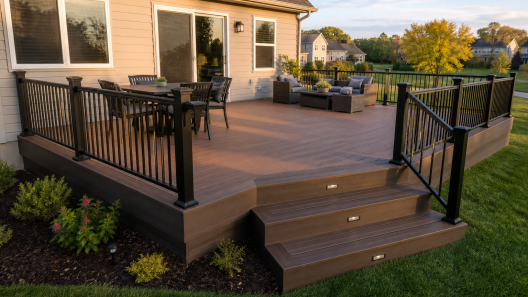
That said, composite decking has come a remarkably long way. Premium lines from Trex Transcend and TimberTech feature multi-tonal color streaking and realistic wood-grain textures that are difficult to distinguish from real wood at a casual glance. The color options are also broader — you can find composites in shades that would be impossible to achieve with natural wood stain.
One aesthetic consideration that catches some homeowners off guard: composite boards have a more uniform appearance. If you love the natural variation of real wood — the knots, the grain shifts, the slight imperfections — composite may feel too “perfect” for your taste.
Heat Retention
This is a genuine disadvantage of composite decking that deserves honest discussion. Composite boards absorb and retain more heat than wood, which means they can become uncomfortably hot underfoot on sunny summer days. In Northern Virginia, where summer temperatures regularly reach the 90s, this is worth considering — especially if your deck gets full afternoon sun.
Lighter-colored composites reflect more heat than darker shades. Some manufacturers have also developed cooler-surface technologies. If heat is a concern, ask about specific product lines designed to address this issue, or plan for shade structures like a pergola or covered porch over part of the deck.
Scratch and Stain Resistance
Capped composite decking resists stains from food, drinks, and mildew far better than wood. Most spills can be wiped up without leaving a mark. However, composite can scratch — heavy furniture, pet claws, and dragged objects can leave marks on the surface. While some scratches can be buffed out with a heat gun or fine sandpaper on certain products, deep gouges are generally permanent.
Wood, by contrast, scratches and stains more easily but can be sanded down and refinished. A deeply scratched or stained wood board can be restored to like-new condition with sanding and a fresh coat of stain. With composite, a badly damaged board typically needs to be replaced.
Environmental Considerations
Both materials have environmental pros and cons. Many composite brands use recycled materials — Trex, for example, states that their boards are made from 95% recycled content, including reclaimed wood fibers and recycled plastic film. This diverts waste from landfills and reduces demand for virgin lumber.
On the other hand, composite boards are not biodegradable and are difficult to recycle at end of life. Pressure-treated wood contains chemical preservatives (typically alkaline copper quaternary, or ACQ) that require careful disposal. Cedar and ipe are natural and biodegradable, but tropical hardwood harvesting raises concerns about deforestation — always look for FSC-certified sources if you go the ipe route.
Which Material Is Right for You?
There is no universally “best” decking material — only the best material for your situation. Here is a quick decision framework:
- Choose pressure-treated wood if: You are on a tight budget, you do not mind annual maintenance, or you are building a deck for a rental property or short-term use.
- Choose cedar if: You want a natural look with moderate durability and you are willing to maintain it regularly.
- Choose ipe if: You want the ultimate in natural beauty and longevity, budget is not the primary concern, and you appreciate a premium material that ages gracefully.
- Choose composite if: You want a low-maintenance, long-lasting deck and you are comfortable with the higher upfront cost. This is especially smart if you plan to stay in your home for 10 or more years.
A Note on Substructure
Regardless of which decking surface you choose, the substructure — the joists, beams, and posts that support the deck — is almost always built from pressure-treated lumber or steel framing. Composite decking is a surface material, not a structural one. The longevity of your deck depends as much on the quality of the framing as it does on the boards you walk on. Make sure your contractor uses properly rated lumber and follows local building codes for your substructure.
Final Thoughts
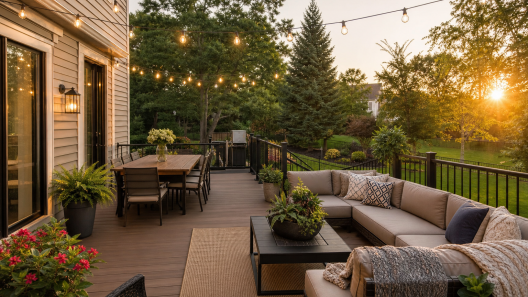
The composite vs. wood debate ultimately comes down to how you want to spend your time and money. Wood gives you a classic, natural material that you can maintain and refinish over the years. Composite gives you a modern, engineered product that frees up your weekends and holds up with minimal effort.
Both can produce a beautiful, functional outdoor living space. The key is going in with realistic expectations about cost, maintenance, and longevity. If you are planning a deck project in Northern Virginia, understanding local project costs and permit requirements will help you budget accurately and avoid surprises.