
Vinyl vs. Fiber Cement Siding: Cost, Durability, and Curb Appeal Compared
Choosing between vinyl and fiber cement siding is one of the most common decisions homeowners face during an exterior renovation. Both materials are widely available, come in a range of colors and styles, and offer clear advantages over aging wood siding. But they’re fundamentally different products with different strengths, trade-offs, and price points.
This guide puts vinyl and fiber cement side by side across every factor that matters — cost, lifespan, maintenance, weather performance, aesthetics, environmental impact, and return on investment — so you can make a confident decision based on your priorities and budget.
Quick Comparison Overview
Before we dive into the details, here’s a high-level snapshot of how these two materials stack up:
| Factor | Vinyl Siding | Fiber Cement Siding |
|---|---|---|
| Installed Cost | $3–$8 per sq ft | $8–$14 per sq ft |
| Lifespan | 20–40 years | 30–50 years |
| Maintenance | Low (occasional washing) | Low–Moderate (repaint every 15–20 years) |
| Fire Resistance | Melts, does not carry fire rating | Class A fire rated (non-combustible) |
| Wind Resistance | Can crack or blow off in high winds | Excellent — withstands high winds |
| Pest Resistance | Not a food source for pests | Not a food source for pests |
| Rot Resistance | Does not rot | Does not rot |
| Aesthetics | Good; limited depth and texture | Excellent; mimics real wood grain |
| DIY Friendly | Yes, for experienced DIYers | No — professional installation required |
| Resale ROI | ~65–70% cost recouped | ~70–80% cost recouped |
| Environmental Impact | PVC-based; difficult to recycle | Natural materials; more recyclable |
Now let’s unpack each of these categories.
Cost: Upfront Price vs. Long-Term Value
Vinyl siding is the more affordable option at the point of purchase. You can expect to pay $3 to $8 per square foot installed, depending on the thickness, profile, and your local labor market. For a mid-sized home, a full vinyl siding project might run $5,000 to $12,000.
Fiber cement siding costs $8 to $14 per square foot installed. That same mid-sized home could cost $12,000 to $21,000 or more with fiber cement. The higher price reflects the heavier material, specialized cutting tools, and the skilled labor required for proper installation.
But upfront cost doesn’t tell the whole story. Fiber cement’s longer lifespan means you may only re-side once in your lifetime, while vinyl might need replacement sooner. Fiber cement also requires less frequent painting than wood (and none at all if you choose factory-finished options), and it won’t need replacement panels from hail or impact damage as often as vinyl. When you calculate cost per year of service, the gap between the two materials narrows significantly.
Lifespan and Durability
Vinyl siding has a typical lifespan of 20 to 40 years. Quality varies widely — budget vinyl (often thinner gauge) may show its age in 15 years, while premium insulated vinyl can last closer to 40. Over time, vinyl can fade from UV exposure, become brittle in cold temperatures, and warp or buckle if improperly installed or exposed to reflected heat (a common issue near energy-efficient windows).
Fiber cement siding lasts 30 to 50 years with proper maintenance. Its cement-based composition makes it dimensionally stable — it doesn’t expand and contract with temperature changes the way vinyl does. It won’t warp, buckle, or become brittle. The primary maintenance task is repainting every 15 to 20 years (or longer with factory-applied finishes), but the underlying material remains structurally sound for decades.
Maintenance Requirements
Both materials are considered low-maintenance compared to wood, but the specifics differ.
Vinyl requires periodic washing — a garden hose and soft brush or a low-pressure power wash once or twice a year keeps it looking clean. You’ll never need to paint it, which is one of vinyl’s biggest selling points. However, if a panel cracks or gets damaged, you’ll need to replace that section, and matching the color of aged vinyl can be tricky since the original panels will have faded.
Fiber cement also benefits from annual washing, but the bigger maintenance consideration is paint. If you chose primed (field-painted) fiber cement, you’ll need to repaint every 10 to 15 years. Factory-finished products like James Hardie’s ColorPlus extend that interval to 15 to 20 years or more. Caulk joints should be inspected annually and refreshed as needed. For a deeper dive into seasonal care routines, see our siding maintenance guides.
Weather and Fire Resistance
This is where fiber cement pulls ahead decisively.
Fire resistance: Fiber cement carries a Class A fire rating — the highest available. It’s non-combustible, meaning it won’t ignite, melt, or contribute fuel to a fire. Vinyl, on the other hand, melts at relatively low temperatures and can release toxic fumes when it burns. Vinyl does not carry a fire rating. If you live in a wildfire-prone area or simply want the safest exterior envelope possible, fiber cement is the clear winner.
Wind resistance: Fiber cement is fastened directly to the wall sheathing with nails, creating a rigid connection that handles high winds well. Vinyl siding uses an interlocking system that allows panels to flex — which is good for thermal expansion but means panels can blow off in severe storms. Premium vinyl products have improved wind ratings, but fiber cement remains more robust in hurricane and tornado zones.
Hail and impact: Vinyl can crack on impact, especially in cold weather when the material becomes more brittle. Fiber cement is denser and absorbs impact better, though it can chip under extreme force. Neither material is truly hail-proof, but fiber cement generally sustains less visible damage.
Curb Appeal and Aesthetics
Both materials offer a wide range of colors and profiles, but the depth of realism differs substantially.
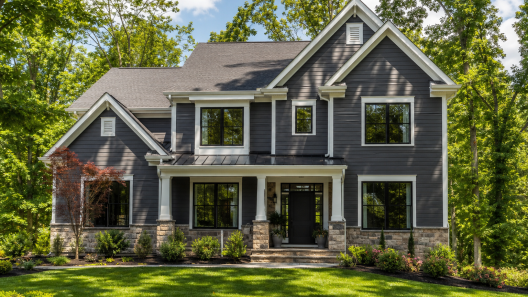
Fiber cement can be manufactured with deep, authentic wood-grain textures that closely replicate the look of natural cedar or oak clapboard. The material’s density allows for crisp shadow lines and dimensional details that genuinely fool the eye. When painted with quality finishes, fiber cement siding is virtually indistinguishable from real wood — even up close.
Vinyl has improved significantly over the years, and premium vinyl products offer better texture than the flat, plasticky panels of decades past. But vinyl still can’t achieve the same depth of grain or the weight and solidity that fiber cement conveys. The difference is most noticeable on close inspection and in how the material catches light — fiber cement creates richer shadow lines that give a home more visual depth.
For homeowners who prioritize curb appeal and want their home to look like it’s clad in real wood, fiber cement is the stronger choice. For those who want a clean, uniform appearance at a lower price point, vinyl delivers solid results.
Environmental Impact
If sustainability factors into your decision, here’s what you should know.
Vinyl siding is made from polyvinyl chloride (PVC), a petroleum-based plastic. Manufacturing PVC involves chlorine chemistry and produces dioxins — persistent environmental pollutants. Vinyl siding is technically recyclable, but recycling infrastructure for post-consumer vinyl is extremely limited in practice. Most vinyl siding ends up in landfills at the end of its life.
Fiber cement siding is made from naturally abundant materials — cement, sand, and cellulose fiber. Its manufacturing process has a smaller chemical footprint than PVC production. Fiber cement is inert and non-toxic in landfills, and some manufacturers have developed recycling programs for production waste. The EPA’s guidance on sustainable building materials encourages homeowners to consider lifecycle environmental impact, not just upfront cost, when choosing exterior products.
Neither material is perfect from an environmental standpoint, but fiber cement generally has a smaller ecological footprint across its full lifecycle.
Resale Value and ROI
New siding is one of the highest-ROI exterior improvements you can make, and the material you choose affects how much value you recoup.
According to industry data from Remodeling Magazine’s Cost vs. Value report, fiber cement siding replacement recoups approximately 70–80% of its cost at resale. Vinyl siding replacement recoups about 65–70%. Both are strong returns compared to many interior renovations, but fiber cement’s premium perception among buyers gives it an edge.
Real estate agents consistently report that fiber cement siding signals quality to prospective buyers. It suggests that the homeowner invested in durable, premium materials — which makes buyers more confident about the overall condition of the home. Our detailed breakdown of siding and resale value explores this topic further with regional data and buyer psychology insights.
Which Should You Choose?
There’s no universally “better” siding — the right choice depends on your specific situation.
Choose vinyl siding if:
- Budget is your primary constraint
- You want the lowest possible maintenance (never painting)
- You’re siding a rental property, secondary structure, or starter home
- You live in a mild climate without extreme weather events
- You want a DIY-friendly installation option
Choose fiber cement siding if:
- You want the most realistic wood-look appearance
- Fire resistance is important (wildfire zones, insurance considerations)
- You plan to stay in the home long-term and want maximum lifespan
- Resale value and buyer perception are priorities
- You live in an area with harsh weather — high winds, hail, or extreme temperature swings
The Bottom Line
Vinyl and fiber cement are both legitimate siding choices, but they serve different homeowner profiles. Vinyl wins on affordability and ease of installation. Fiber cement wins on durability, fire safety, aesthetics, and long-term value. For most homeowners making a once-in-a-generation siding investment, fiber cement’s higher upfront cost is justified by its superior performance and return.
Whichever direction you lean, make sure you’re comparing apples to apples — get quotes for both materials from qualified contractors, ask about warranty specifics, and factor in the full cost of ownership over 20 to 30 years. That’s where the real value picture becomes clear.
Looking at other ways to improve your home’s exterior? Explore our guides on roofing materials and replacement, energy-efficient windows, and gutter systems to plan a complete exterior upgrade.